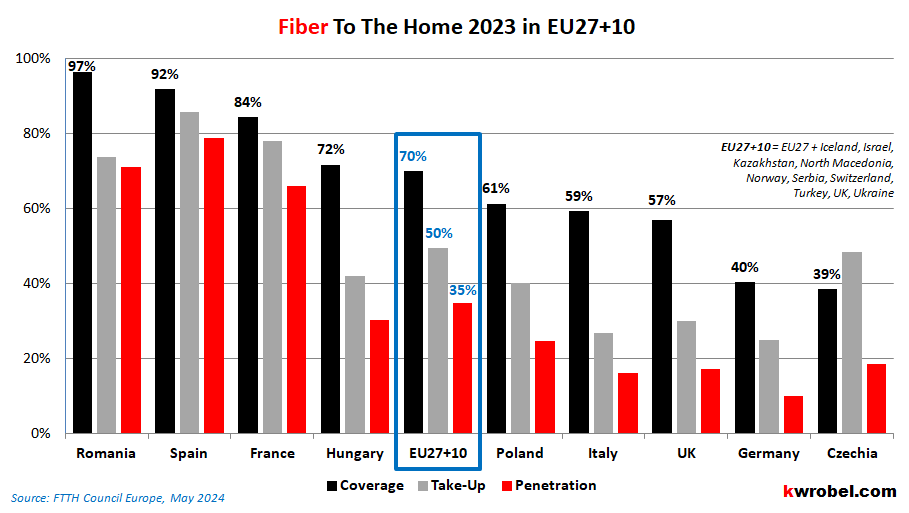
Fiber-To-The-Home 2023 in EU27+10. In mid-2024 the FTTH Council Europe published its report on the fiber market in the EU and 10 other countries (Iceland, Israel, Kazakhstan, North Macedonia, Norway, Serbia, Switzerland, Turkey, UK and Ukraine). In 2023 this area was inhabited by 847 million people and covered 350 million households in total.
- 70% of these households had capability to connect to a fiber FTTH network (Access) with a minimal required additional installation (Coverage of 70%, “availability”)
- 50% of the households that had capability actually subscribed (Subscribers) to the fiber services (Take-Up of 50%, “utilisation” based on available connections)
- Therefore the Penetration was at 35% representing the ratio of Subscribers to Total Households
The source of information for the report was data collected by the European Commission and local regulatory bodies as well as by the operators.
For illustrative purposes from the report I picked the four largest “old-EU” countries by population (Germany 84.5m, France 68.0m, Italy 59.7m and Spain 47.4m), four largest “new-EU” countries (Poland 38.0m, Romania 19.1m, Czechia 10.9m and Hungary 9.8m) and the UK (67.8m). The highest Coverage (availability) was in Romania at 97% however the highest Take-Up (utilisation) was in Spain at 86% therefore the higest Penetration was in Spain at 79%. At the other end of this 9-country statistics we can see Germany with the Penetration at only 10% coming from 40% Coverage and 25% Take-Up.
I focused on the Coverage ratio (black bars) as this is the first step to get people subscribed to the fiber services – you need to build the infrastructure first and make it easily available, with a minimal additional installation.
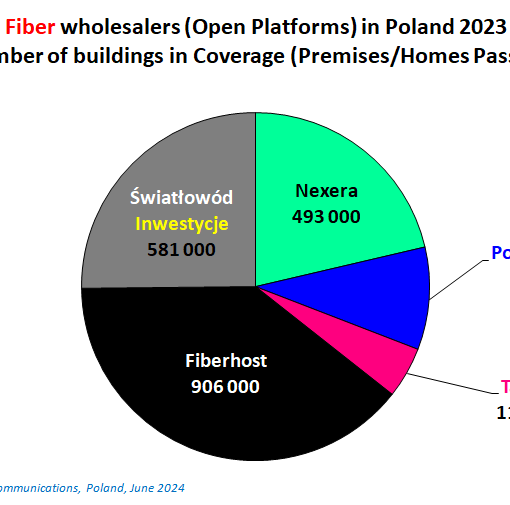
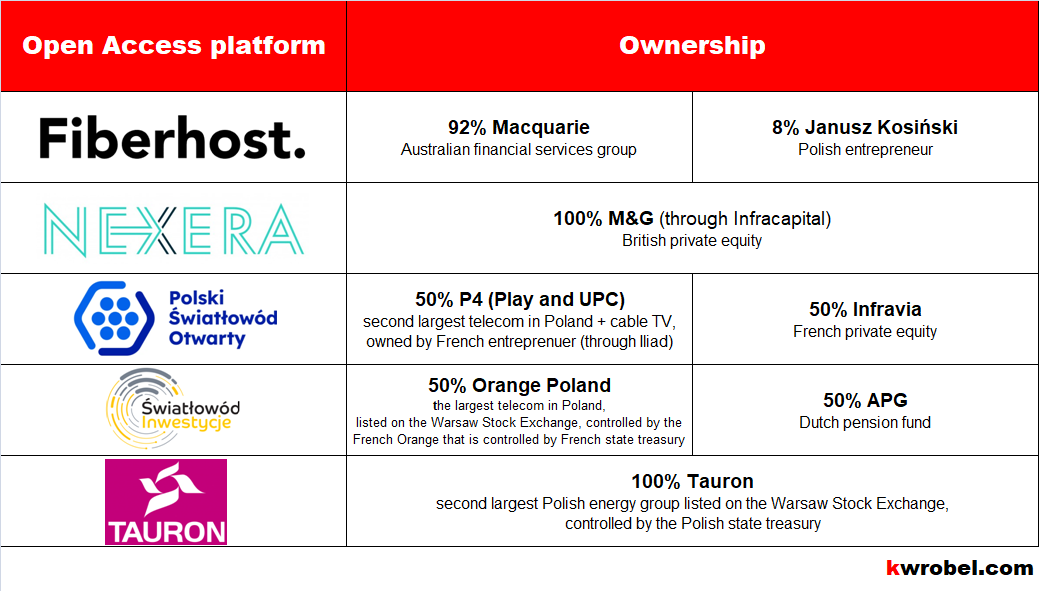
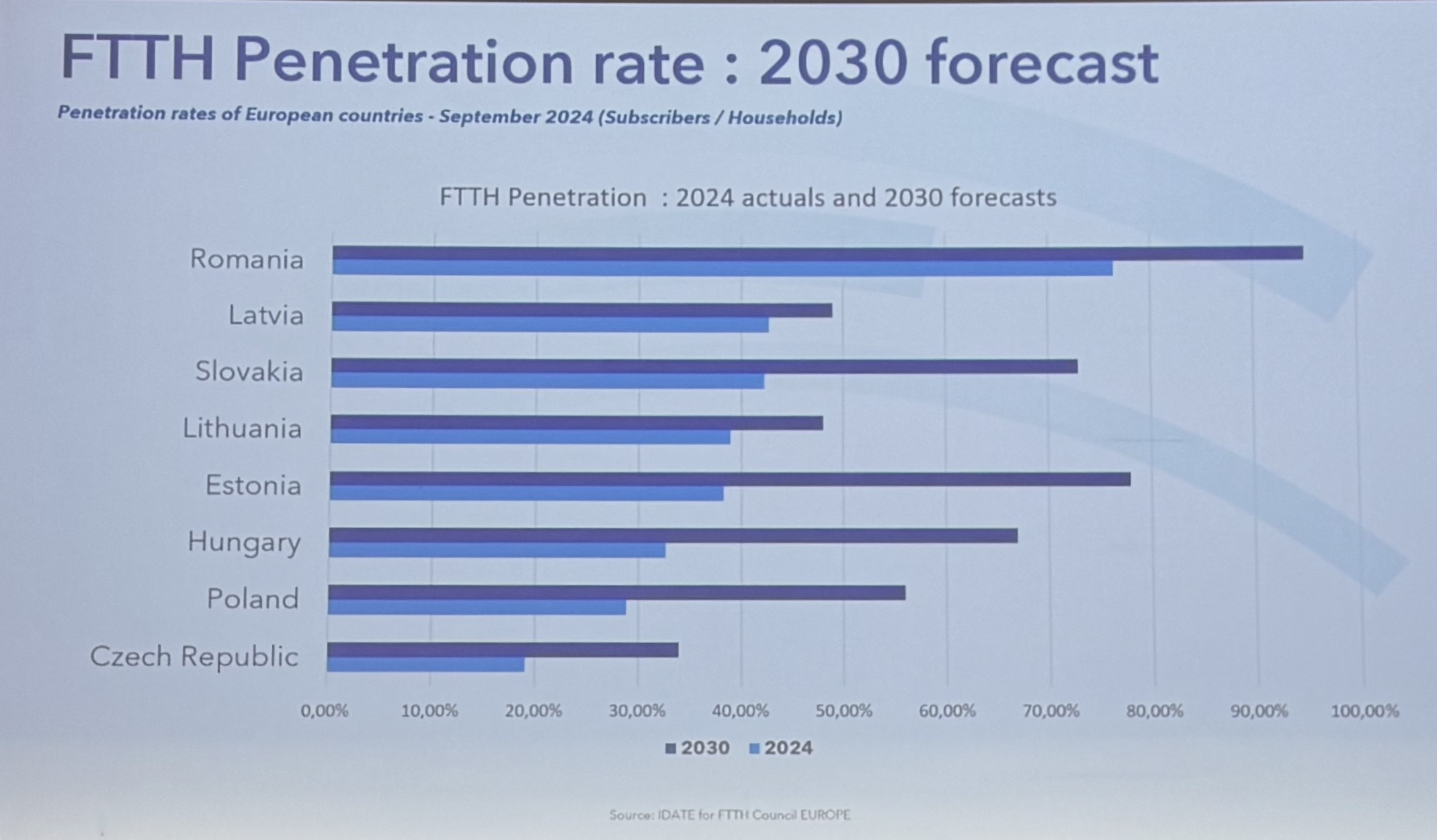
In 2023, Poland was still chasing the European average having reached 61% Coverage with 40% Take-Up resulting in 25% Penetration at the end of the year which was well below half of what Spain achieved.